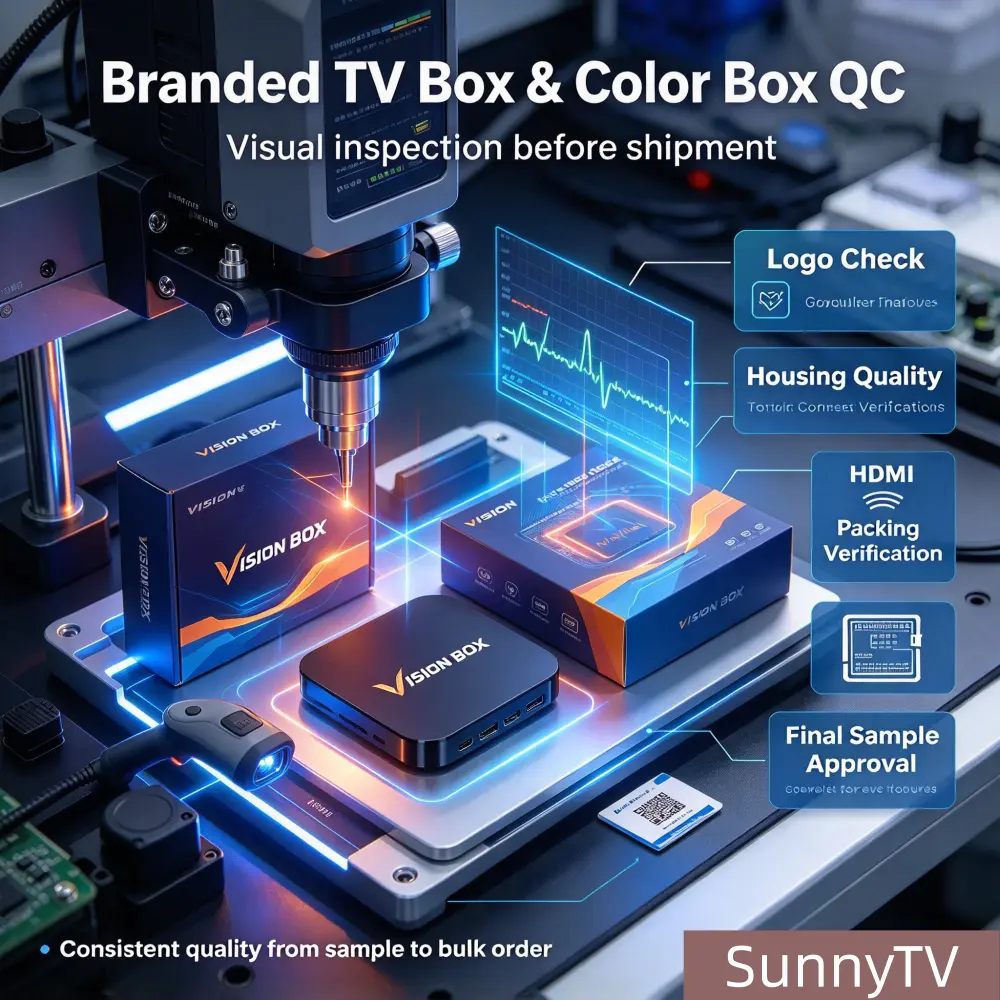
From Sketch to Mass Production: A Step-by-Step Guide to Custom OTT Box Manufacturing
The global over-the-top (OTT) media ecosystem has evolved rapidly beyond standardized consumer streaming sticks. Today, telecommunications operators, hospitality chains, enterprise digital signage networks, and specialized streaming media brands require tailored hardware platforms to deliver proprietary content securely and reliably. Designing and bringing a Custom OTT Box to market requires traversing a complex industrial workflow that bridges industrial design, electronic engineering, firmware optimization, and high-precision manufacturing.
Operating from Dongguan, China—the world’s central hub for advanced electronics assembly and Surface Mount Technology (SMT) production—our manufacturing facility partners with global clients to transform rough conceptual sketches into enterprise-grade hardware. This guide outlines the comprehensive, step-by-step manufacturing lifecycle of a modern streaming media device, highlighting the key technical engineering decisions, quality control checkpoints, and supply chain strategies necessary to ensure a flawless product launch.
Phase 1: Conceptualization and Feasibility Analysis
Every successful hardware program begins with a rigorous definition of product requirements. Before cutting steel for injection molds or laying out copper traces on a circuit board, product directors and factory engineers must align on the core technical specifications.
During the initial architectural discovery phase, our engineering team works closely with clients to translate commercial goals into a precise Technical Requirements Document (TRD). Key structural considerations evaluated during this phase include:
- Target Application & Operating Environment: Determining whether the device will serve residential TV viewers, operate continuously in commercial digital signage environments, or integrate into hospitality IPTV systems.
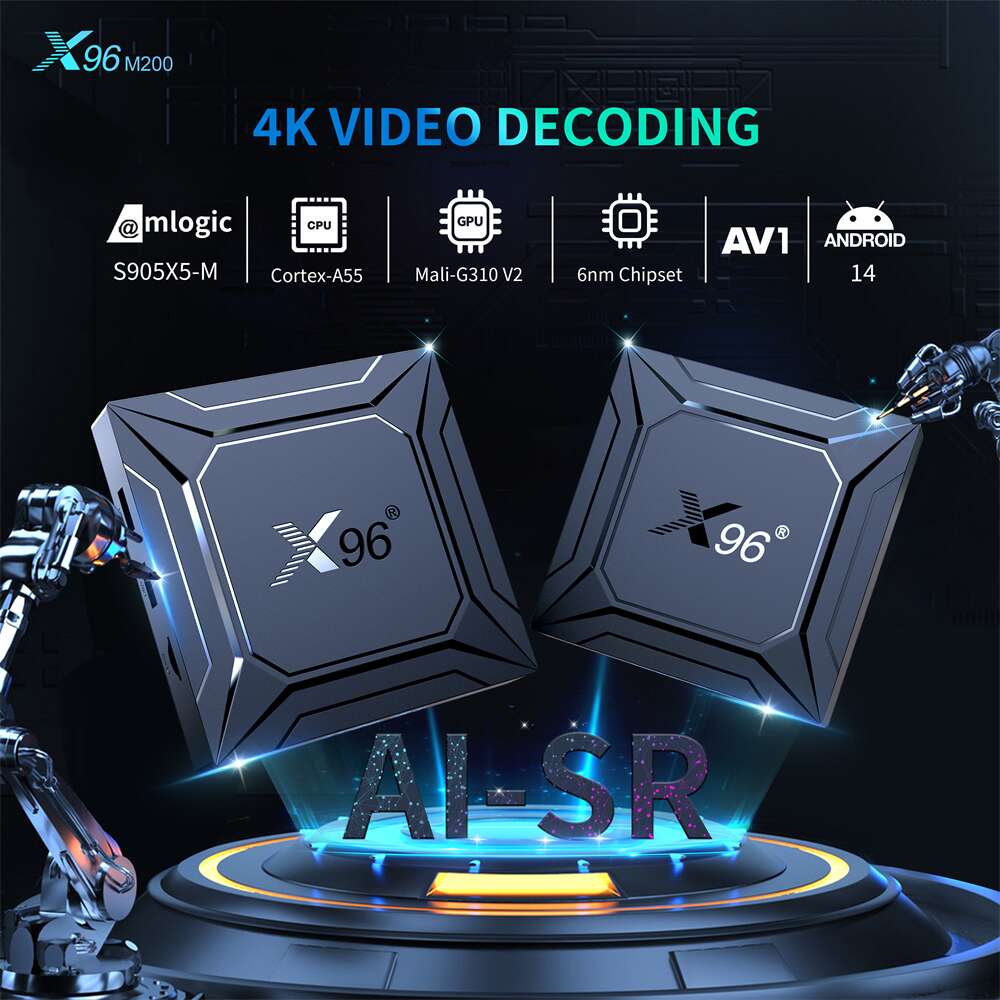
- Processing & Silicon Architecture: Selecting the optimal System on Chip (SoC) family—such as Amlogic, Rockchip, or Allwinner—based on required video decoding capabilities, thermal design power (TDP), and memory bus architecture.
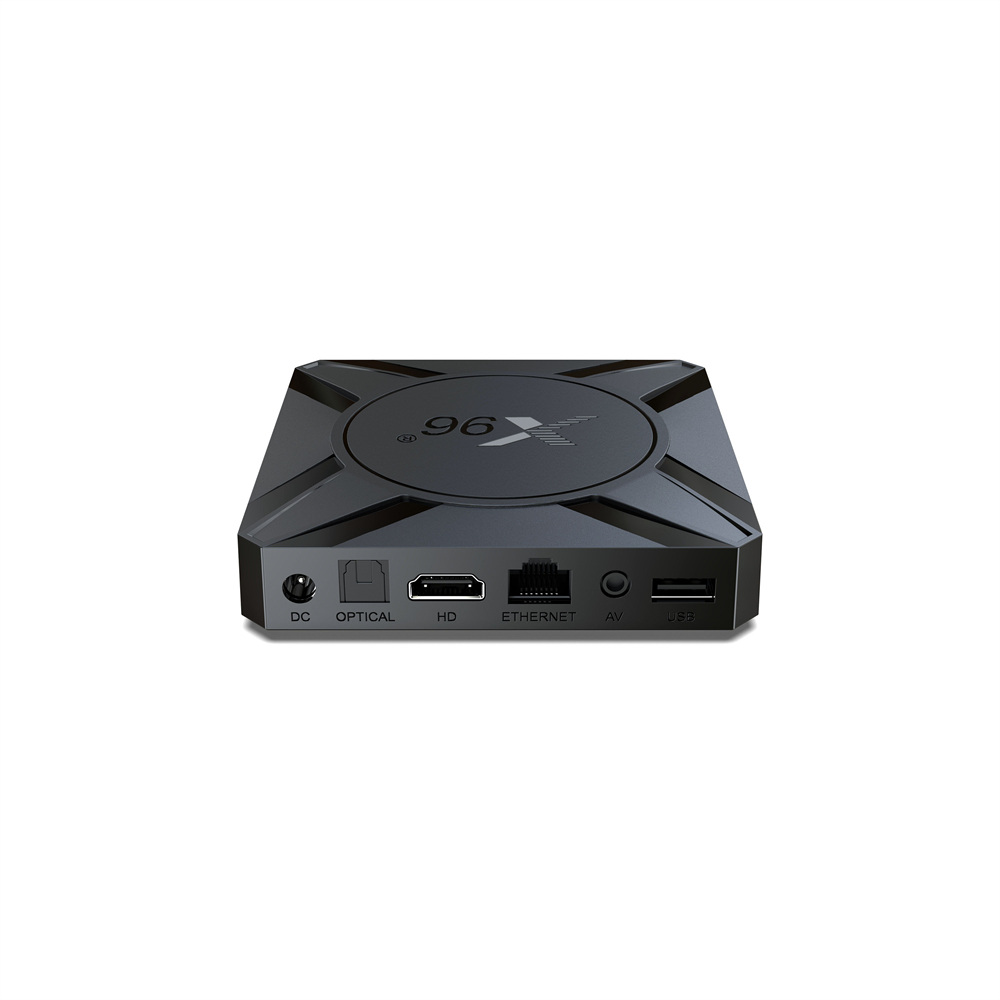
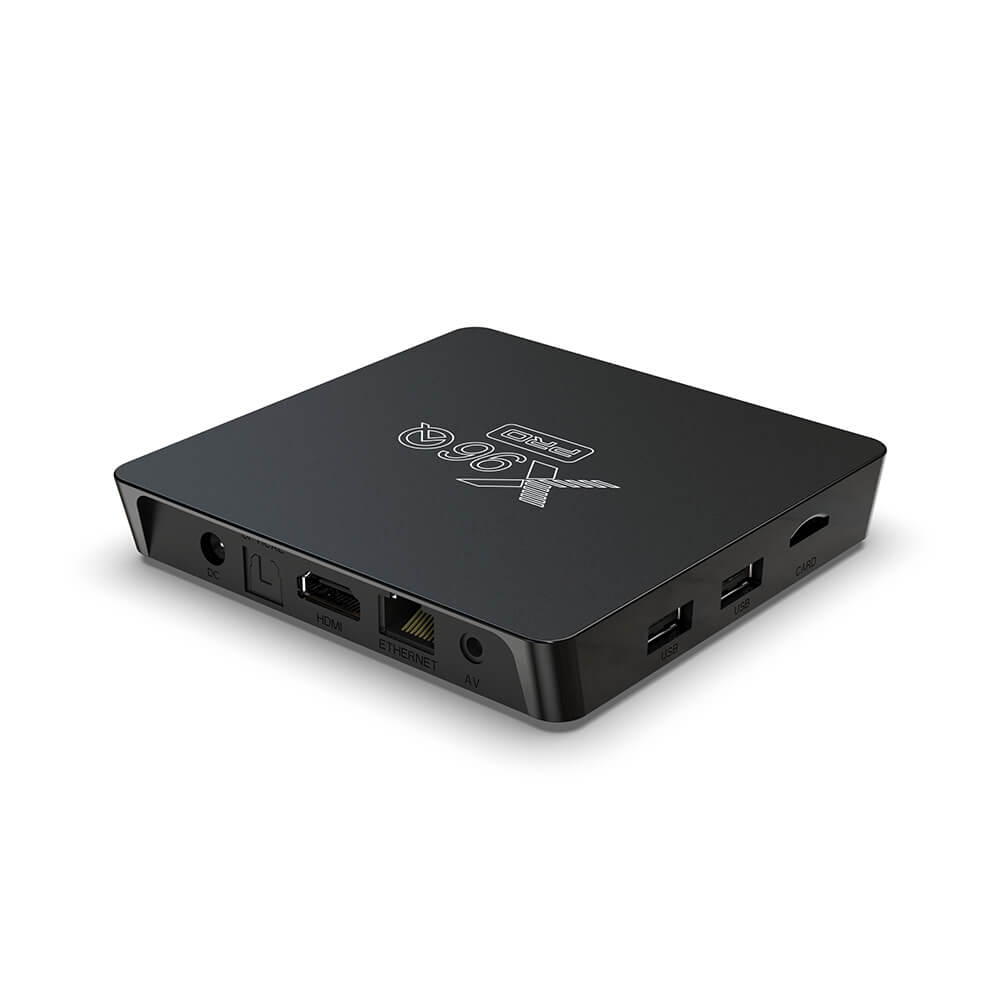
- Connectivity & Peripheral Interfaces: Defining physical port requirements including HDMI 2.1, Gigabit Ethernet, Optical SPDIF, USB 3.0, TF card slots, and legacy AV connections.
- Wireless Communications: Specifying antenna layouts and module configurations for Wi-Fi 6, Wi-Fi 6E, Bluetooth 5.2, or optional 4G/5G cellular failover capabilities.
Establishing clear technical parameters early prevents costly engineering change orders (ECOs) during later development stages. For clients seeking a tailored device, specifying target performance parameters allows engineers to select components that deliver maximum stability at an optimized bill of materials (BOM) cost.
Phase 2: Industrial Design (ID) and Mechanical Engineering (ME)
Once the technical specifications are finalized, the project transitions into industrial design. This phase dictates both the visual identity of the product and its mechanical ergonomics.
Industrial Design Concepts
Industrial designers generate preliminary 2D concept sketches that explore various form factors, surface textures, indicator LED placement, and brand placement. Modern streaming hardware must balance sleek aesthetics with functional heat dissipation requirements. Once a preferred visual direction is selected, designers construct detailed 3D CAD models using software such as SolidWorks or Rhino.
Mechanical Structure and Thermal Management
Transforming a visual surface design into a manufacturable mechanical housing requires meticulous mechanical engineering. Engineers design internal structural ribs, snap-fit joints, screw boss locations, and port alignment guides while leaving adequate clearance for the internal circuit board assembly.
Thermal management is a vital aspect of mechanical design. High-performance SoCs capable of rendering 4K or 8K HDR content generate considerable localized heat. Without effective passive cooling, internal thermal buildup triggers CPU throttling, resulting in dropped frames and system instability. Mechanical engineers run advanced Computational Fluid Dynamics (CFD) thermal simulations to model heat flow within the enclosure, optimizing the thickness, material composition, and surface area of aluminum heat sinks alongside chassis ventilation placement.
Phase 3: Hardware Engineering and PCBA Design
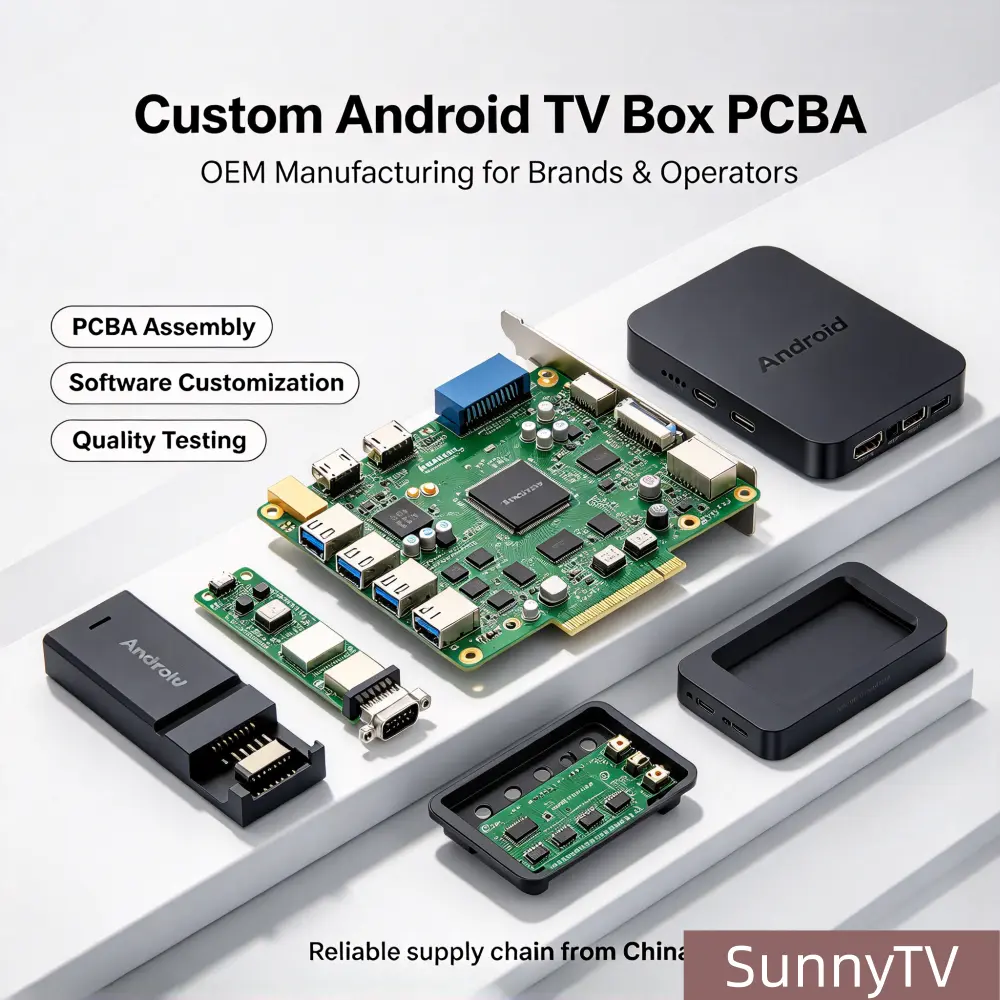
Simultaneously, electronic hardware engineers develop the internal circuit architecture. The Printed Circuit Board Assembly (PCBA) serves as the functional brain of the device, routing high-speed digital signals, managing power distribution, and supporting peripheral interfaces.
Developing the electronic architecture for a Custom OTT Box follows a disciplined circuit design lifecycle:
- Schematic Capture: Mapping circuit connections between the central processor, DDR4/DDR5 RAM chips, eMMC or UFS flash storage, power management integrated circuits (PMIC), wireless modules, and physical connector interfaces.
- Multi-Layer PCB Layout: Routing multi-layer circuit boards—typically 4 to 6 layers for streaming hardware—to handle high-speed differential signal lines such as HDMI and USB 3.0 while maintaining strict impedance matching.
- Power Distribution Network (PDN) Optimization: Designing stable power supply rails with low noise thresholds to ensure clean power delivery to sensitive wireless chips and digital video processing cores.
- Electromagnetic Compatibility (EMC) Shielding: Placing dedicated metal shielding cans and grounding planes over high-frequency components to prevent internal cross-talk and pass international regulatory standards.
Engineers perform rigorous signal integrity (SI) and power integrity (PI) simulations before sending Gerber files to the prototyping laboratory. Selecting high-grade passive components and thermal pads during circuit layout prevents intermittent hardware glitches during continuous long-term operation.
Phase 4: Prototyping and Tooling Fabrication
With mechanical CAD models and electronic Gerber files complete, the project moves into physical prototyping and hard tooling fabrication.
Functional Prototyping (EVT Phase)
Engineering Validation Test (EVT) prototypes are built to verify core circuit functionality. Initial PCBAs are produced in small sample runs using rapid surface-mount prototype lines. Simultaneously, prototype plastic housings are created using high-precision CNC machining or stereolithography (SLA) 3D printing. Engineers assemble these preliminary units to conduct initial power-on testing, verify hardware interface communication, and begin low-level software driver integration.
Steel Injection Mold Tooling
Once EVT validation confirms circuit stability and physical fit, steel injection molds for the plastic chassis are designed and cut using high-precision CNC milling and Electrical Discharge Machining (EDM). Tooling fabrication typically requires 30 to 45 days. The quality of the steel mold dictates the surface finish, dimensional tolerances, and structural integrity of the final plastic housing.
Following initial mold assembly, trial plastic injection runs generate T1 samples. Engineers inspect T1 samples for physical defects such as sink marks, warping, mold flash, or misaligned port openings. Adjustments are made to mold temperature, injection pressure, and cavity geometry until the plastic components achieve perfect snap-fits and surface finishes.
Phase 5: Software Development, BSP, and Firmware Customization
Hardware is only as good as the software driving it. Modern media players require extensive system-level software engineering to ensure smooth playback, secure content streaming, and intuitive user interfaces.
When developing a bespoke streaming player, software customization occurs across multiple layers of the system architecture:
| Software Layer | Customization Scope | Commercial Benefit |
|---|---|---|
| Board Support Package (BSP) & Kernel | Driver optimization for Wi-Fi, Bluetooth, GPU acceleration, power management, and thermal throttling tables. | Ensures hardware stability, low memory overhead, and smooth system responsiveness. |
| DRM & Security Provisioning | Integration of Widevine L1, PlayReady, and HDCP 2.2/2.3 key injection into secure factory processing lines. | Enables playback of premium 4K streaming content from licensed content platforms. |
| Middleware & Protocols | Pre-configuring TR-069, USP, or custom MQTT management protocols for remote device administration. | Allows network operators to monitor device health, diagnose faults, and push OTA updates. |
| Application & Launcher UI | Custom boot animations, proprietary brand launcher interfaces, and app lock restrictions. | Reinforces brand identity and prevents end-users from tampering with device settings. |
For enterprise operators and brand owners, pre-installing custom launchers and security profiles directly at the factory level eliminates the need for manual device staging prior to deployment. A fully configured Custom OTT Box arrives at the end customer's location ready for immediate plug-and-play operation.
Phase 6: Pilot Production and Design Validation
Before initiating full-scale mass production, the factory executes controlled pilot production runs. These validation stages act as quality gates to identify potential assembly bottlenecks, refine production line balance, and stress-test the hardware under real-world operating conditions.
Design Validation Testing (DVT)
During DVT, a run of 50 to 100 units is assembled using actual production molds and final-spec PCBAs. These units are subjected to comprehensive environmental and stress testing inside specialized testing laboratories:
- Thermal Chamber Stress Testing: Operating devices continuously under 100% CPU and GPU load in environmental chambers set between 40°C and 50°C for 24 to 48 hours to check for thermal instability.
- Drop & Impact Resistance: Dropping packaged and unpackaged units from standardized heights onto hard surfaces to verify structural plastic durability and internal soldering strength.
- Electrostatic Discharge (ESD) Testing: Applying direct air and contact electrostatic discharges (up to ±8kV contact / ±15kV air) to physical ports and chassis seams to ensure electrical resilience.
- Vibration & Transportation Simulation: Placing packaged master cartons onto high-frequency vibration tables to simulate long-distance sea and air freight conditions.
Process Validation Testing (PVT)
The PVT stage represents the final trial run before mass production. Assembled on the actual high-speed mass production line, PVT validates that the assembly workers, automated testing fixtures, and packaging processes can maintain target yield rates (typically exceeding 98.5%) at full operational speed.
Phase 7: Mass Production and Quality Assurance
With DVT and PVT approvals signed off, full-scale mass production commences. Manufacturing a high-reliability Custom OTT Box at volume relies on advanced SMT automation, automated optical inspections, and multi-tier quality control systems.
Surface Mount Technology (SMT) Assembly
Raw circuit boards begin their journey on high-speed SMT placement lines in climate-controlled cleanroom environments. The automated SMT sequence involves several precise manufacturing operations:
- Solder Paste Printing & SPI: High-precision stencils deposit solder paste onto copper PCB pads. Solder Paste Inspection (SPI) 3D laser systems measure solder volume and height alignment before component placement.
- High-Speed Component Pick-and-Place: Advanced Yamaha or Panasonic placement machines mount micro-resistors, capacitors, memory ICs, and complex BGA-packaged processors onto the board at speeds exceeding tens of thousands of components per hour.
- Reflow Soldering: The populated circuit board passes through multi-zone reflow ovens, where controlled temperature profiles melt the solder paste to form mechanically solid and electrically sound solder joints.
- Automated Optical Inspection (AOI): High-resolution multi-angle cameras inspect every soldered board, automatically detecting component bridging, tombstoning, missing parts, or polarity errors.
Post-SMT Assembly and Functional Testing (FCT)
Following SMT inspection, larger physical connectors, heat sinks, and shielding cans are soldered via selective wave soldering or manual assembly. The completed PCBA then undergoes automated functional circuit testing (FCT).
During FCT, custom needle bed test fixtures connect directly to test points on the circuit board. Automated software scripts flash initial bootloader code and systematically verify every hardware subsystem: measuring power rail voltages, testing memory read/write speeds, validating Wi-Fi/Bluetooth signal power, and confirming HDMI video output signals.
Burn-In Aging Test and Final Assembly
Every fully assembled board passes through an intensive burn-in aging facility. PCBAs are mounted onto aging racks, connected to power sources, and subjected to continuous high-bitrate video playback and loop stress tests for 4 to 12 hours. This process accelerates early component mortality, catching defective ICs inside the factory rather than after shipment to end customers.
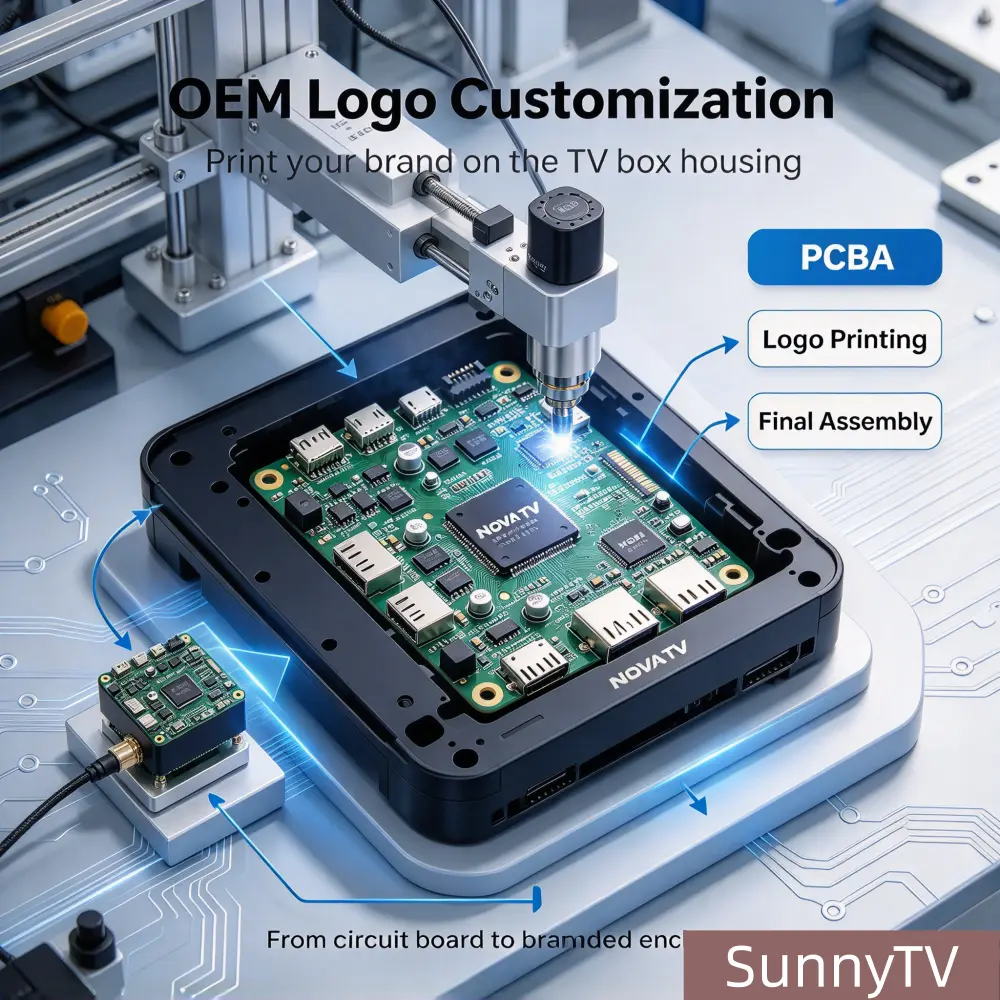
Boards passing the burn-in test enter final enclosure assembly. Workers mount the PCBA into the custom plastic housing, attach thermal interface pads, secure internal Wi-Fi antennas, snap the chassis closed, and laser-engrave serial numbers and regulatory compliance logos onto the lower casing.
Phase 8: International Regulatory Compliance and Certifications
Global distribution of electronic hardware requires strict adherence to international safety, environmental, and telecommunications standards. A reputable Dongguan manufacturing partner manages testing and certification procedures with accredited laboratory partners prior to commercial export.
Common regulatory requirements for international distribution include:
- Safety & Electromagnetic Compatibility: CE (European Union), FCC (United States), and UKCA (United Kingdom) certifications ensuring the device does not emit harmful radio frequency interference and operates safely under normal electrical loads.
- Environmental Standards: Compliance with RoHS (Restriction of Hazardous Substances) and REACH directives, certifying that all internal components, solder alloys, and plastic housing materials are free from toxic heavy metals and restricted chemical compounds.
- Wireless & Telecom Licensing: Anatel, Telec, or RED certifications for internal Wi-Fi and Bluetooth transmitters operating within specific national radio frequency bands.
- Content & DRM Licensing: Securing authorized HDMI Adopter agreements, Dolby Audio licensing, and Google Widevine L1 DRM provision certificates required for official media streaming playback.
Strategic Supply Chain Advantages of Dongguan Manufacturing
Selecting the right manufacturing location plays a pivotal role in the long-term success of a hardware program. Dongguan has earned an international reputation as the premier manufacturing center for streaming media hardware, commercial displays, and smart electronics due to its unmatched supply chain density.
Key strategic benefits of partnering with a Dongguan-based manufacturing facility include:
- Unmatched Component Density: Within a 30-minute radius of our facility reside leading component vendors, plastic injection molders, SMT toolmakers, and packaging suppliers, reducing prototyping lead times and material transport costs.
- Skilled Engineering Workforce: Access to experienced electronic hardware engineers, firmware developers, and quality control technicians specialized in video processing and streaming hardware.
- Scalable Production Capacity: Highly automated production lines allow facilities to seamlessly scale from low-volume pilot batches of 1,000 units up to high-volume monthly shipments exceeding 100,000 units.
- Streamlined Export Logistics: Close proximity to major international deep-water ports in Shenzhen and Hong Kong facilitates rapid, cost-effective global air and sea freight distribution.
Summary of the Manufacturing Journey
Bringing a Custom OTT Box from initial sketch to mass production is a structured, engineering-intensive journey. By executing each phase with technical precision—from architectural selection and PCBA routing to thermal simulation, automated SMT assembly, and rigorous burn-in testing—brands can deliver reliable hardware that elevates their service offering.
Whether you are a telecommunications operator launching a nationwide IPTV service, an enterprise media provider expanding a digital signage network, or a specialized brand developing a bespoke media player, partnering with an experienced OEM/ODM manufacturer in Dongguan ensures your hardware meets the highest international quality standards. Contact our engineering team today to review your project requirements, arrange technical consultations, or request evaluation hardware samples.

Share your thoughts
All fields marked with an asterisk() are required