OEM vs. ODM for Android TV Boxes: How to Choose the Right Model for Your Brand
Launching a successful hardware product in the rapidly expanding streaming media market requires a clear manufacturing roadmap. Electronics brand owners, telecom operators, and digital signage distributors frequently encounter a pivotal decision early in their procurement process: deciding between OEM Android TV Boxes and ODM Android TV Boxes. Understanding the distinction between these two production frameworks dictates your upfront capital investment, time to market, intellectual property ownership, and ultimate product differentiation.
Based in Dongguan, China—the world’s premier hub for consumer electronics assembly and SMT (Surface Mount Technology) manufacturing—our facility produces custom hardware solutions for international clients across North America, Europe, Southeast Asia, and the Middle East. Whether you are aiming to deploy thousands of standardized streaming devices for an IPTV network or build a completely bespoke media center with custom tooling and integrated AI accelerators, choosing the right production path ensures smooth operational execution and optimal return on investment.
Understanding the Fundamentals: What Is OEM?
Original Equipment Manufacturing, universally abbreviated as OEM, refers to a production model where the client supplies the design specifications, software requirements, and engineering schematics, while the factory acts strictly as the execution and assembly partner. When you order OEM Android TV Boxes, your internal engineering team or outsourced industrial designers maintain full creative control over the product concept.
In a pure OEM partnership, the brand owner provides complete product documentation. This documentation generally encompasses the following items:
- Mechanical 3D CAD files for the outer chassis, including heat sink positioning and ports layout
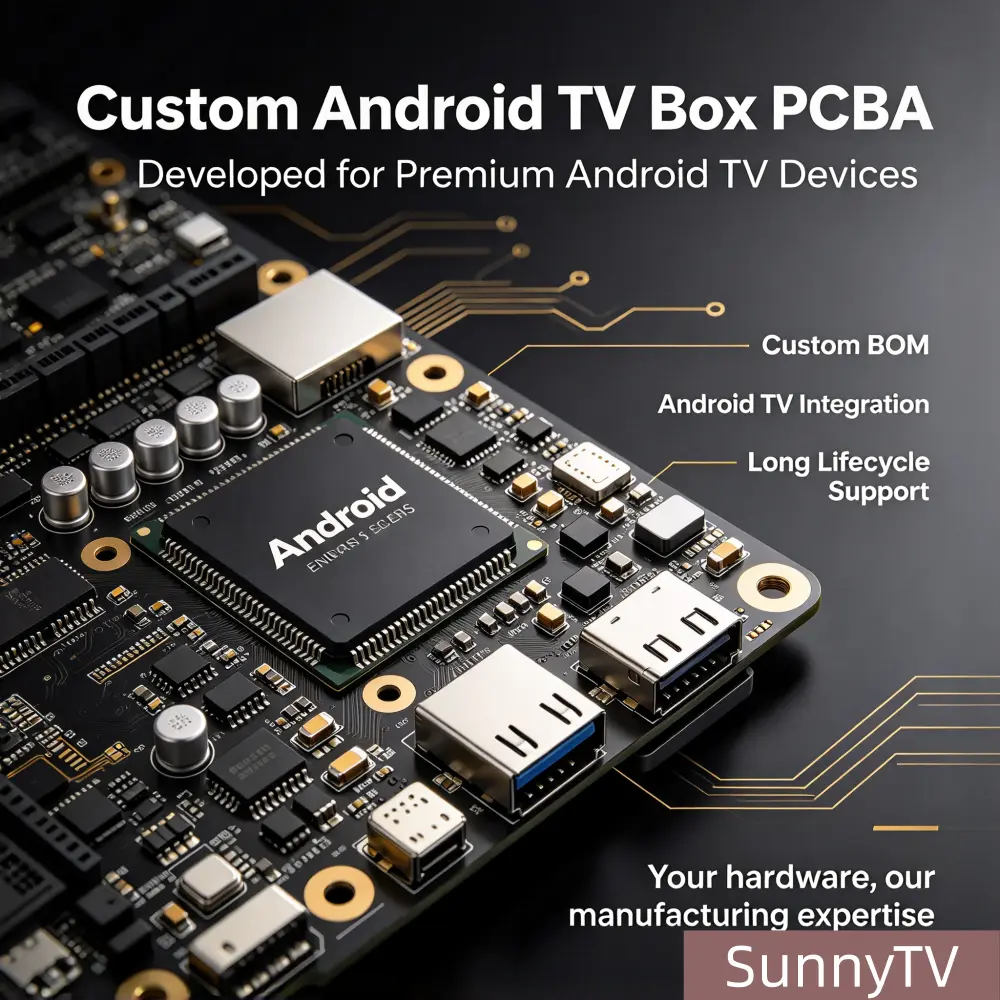
- Exact Printed Circuit Board Assembly (PCBA) schematics and component bill of materials (BOM)
- Custom software builds, including customized Android Open Source Project (AOSP) firmware or certified Android TV OS builds
- Specific packaging artwork, instructional manuals, and custom-branded accessories such as Bluetooth voice remotes
Under this arrangement, the manufacturer’s primary responsibility is sourcing raw components according to your exact BOM specifications, managing high-precision SMT placement, assembling the physical units, performing stringent quality checks, and shipping the finished goods. Sourcing OEM Android TV Boxes is ideal for established technology brands that possess dedicated hardware engineering resources and wish to maintain complete ownership of their physical industrial design and proprietary circuit design.
Understanding the Fundamentals: What Is ODM?
Original Design Manufacturing, or ODM, is a cooperative framework where the factory designs, engineers, and manufactures the hardware using its own existing intellectual property and off-the-shelf reference designs. When opting for ODM Android TV Boxes, the client selects an existing hardware architecture developed by the factory and applies white-label branding, customized packaging, and firmware-level tweaks.
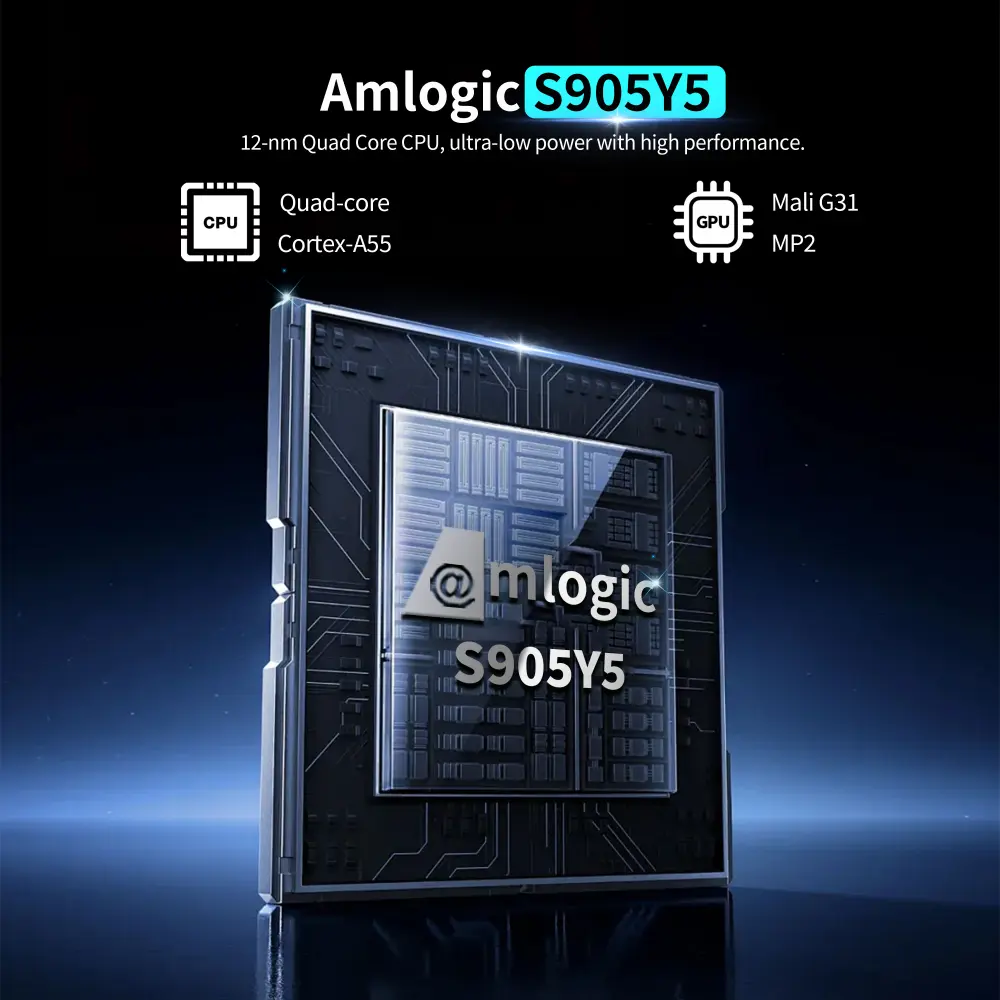
This approach significantly lowers the barrier to entry for businesses that want to bring hardware to market quickly without investing hundreds of thousands of dollars in initial research and development. The factory provides pre-engineered PCBA layouts built around industry-standard chipsets from leading silicon vendors such as Amlogic, Rockchip, and Allwinner.
Clients purchasing ODM Android TV Boxes can typically customize several surface-level and software parameters without initiating structural tooling changes:
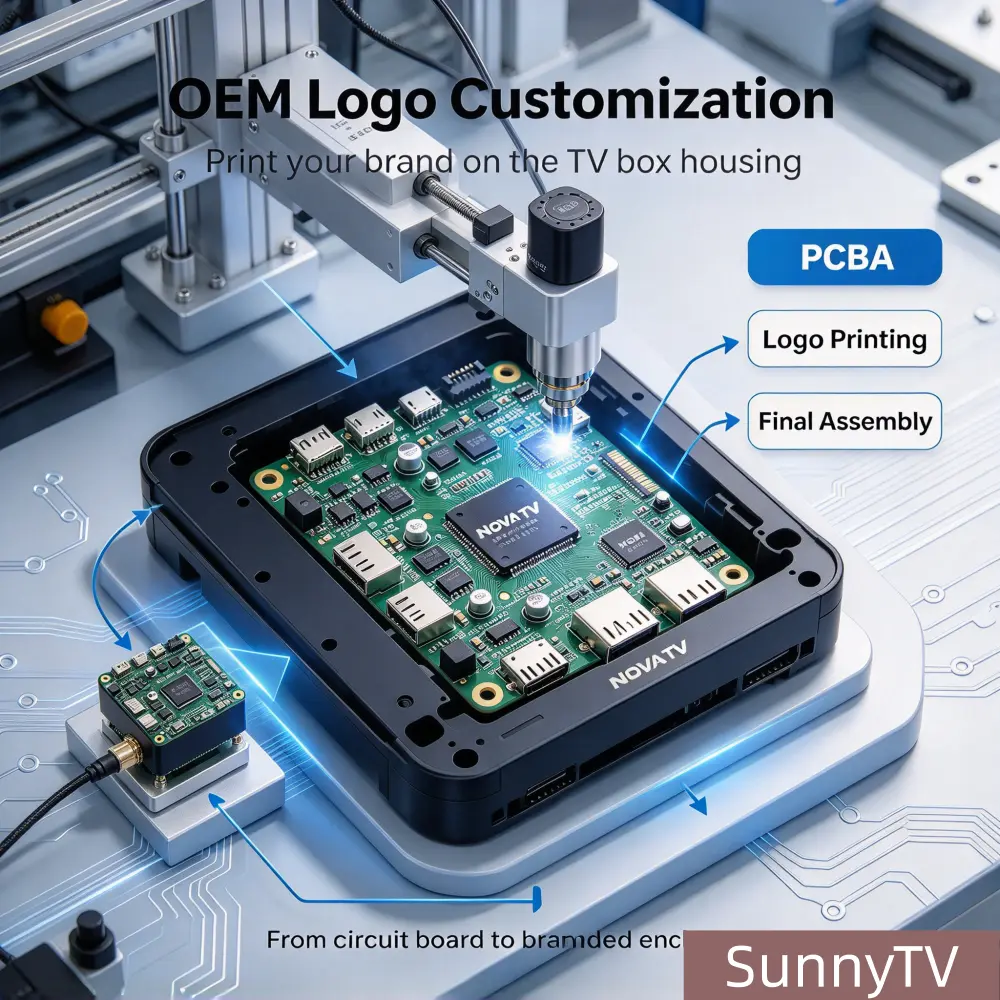
- Silk-screen logo printing on the top plastic or metal housing
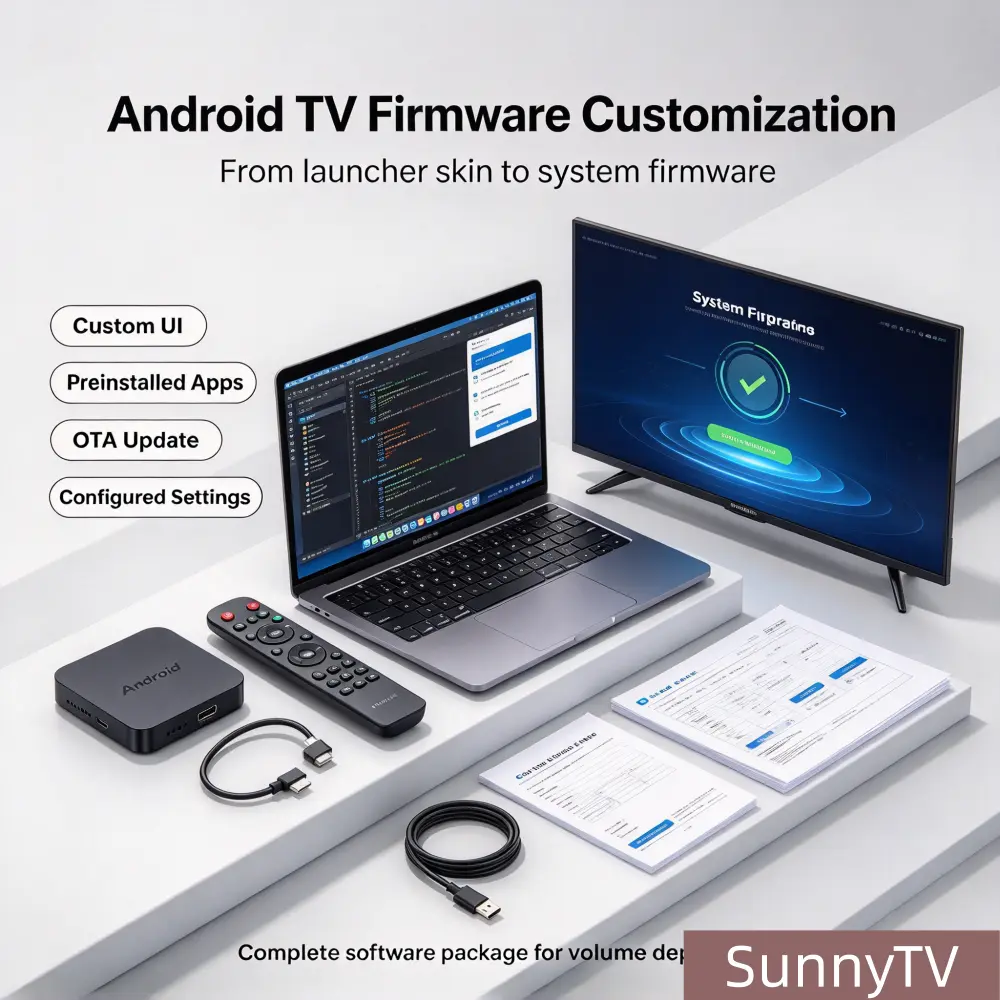
- Custom boot animation, pre-installed client applications, and tailored launcher UI skins
- Color variations for the chassis plastic and custom-designed gift box packaging
- Custom remote control button layouts and brand logo placement
- RAM and storage capacity configurations (e.g., pairing 2GB DDR4 RAM with 16GB eMMC storage)
By leveraging the factory’s pre-certified designs, businesses choosing ODM Android TV Boxes save substantial time and eliminate the risk of hardware engineering failures during initial trial runs.
Head-to-Head Comparison: OEM vs. ODM Manufacturing
To help procurement managers and product directors make a well-informed selection, the table below breaks down the key operational differences between both business models when producing media streaming hardware.
| Evaluation Criteria | OEM Model | ODM Model |
|---|---|---|
| Primary Responsibility | Client provides design; factory manufactures. | Factory designs and manufactures; client white-labels. |
| Initial R&D Expense | High ($30,000 – $100,000+ for tooling & engineering). | Minimal to Zero (covered by factory's existing platform). |
| Time to Market | 6 to 12 months (includes prototype iterations). | 4 to 8 weeks (leveraging ready-to-use PCBA platforms). |
| Minimum Order Quantity (MOQ) | High (typically 3,000 to 5,000+ units per run). | Low to Moderate (typically 500 to 1,000 units). |
| IP Ownership | Client owns hardware schematics and custom tooling. | Factory owns core hardware design and PCBA layout. |
| Product Differentiation | 100% unique custom design on the market. | Shared architectural base with custom branding/software. |
Deep Dive into the OEM Customization Workflow
Developing fully customized OEM Android TV Boxes follows a rigorous industrial engineering pipeline. Understanding this step-by-step process is crucial for managing project timelines and setting realistic expectations with internal stakeholders.
1. Architectural Feasibility and Component Selection
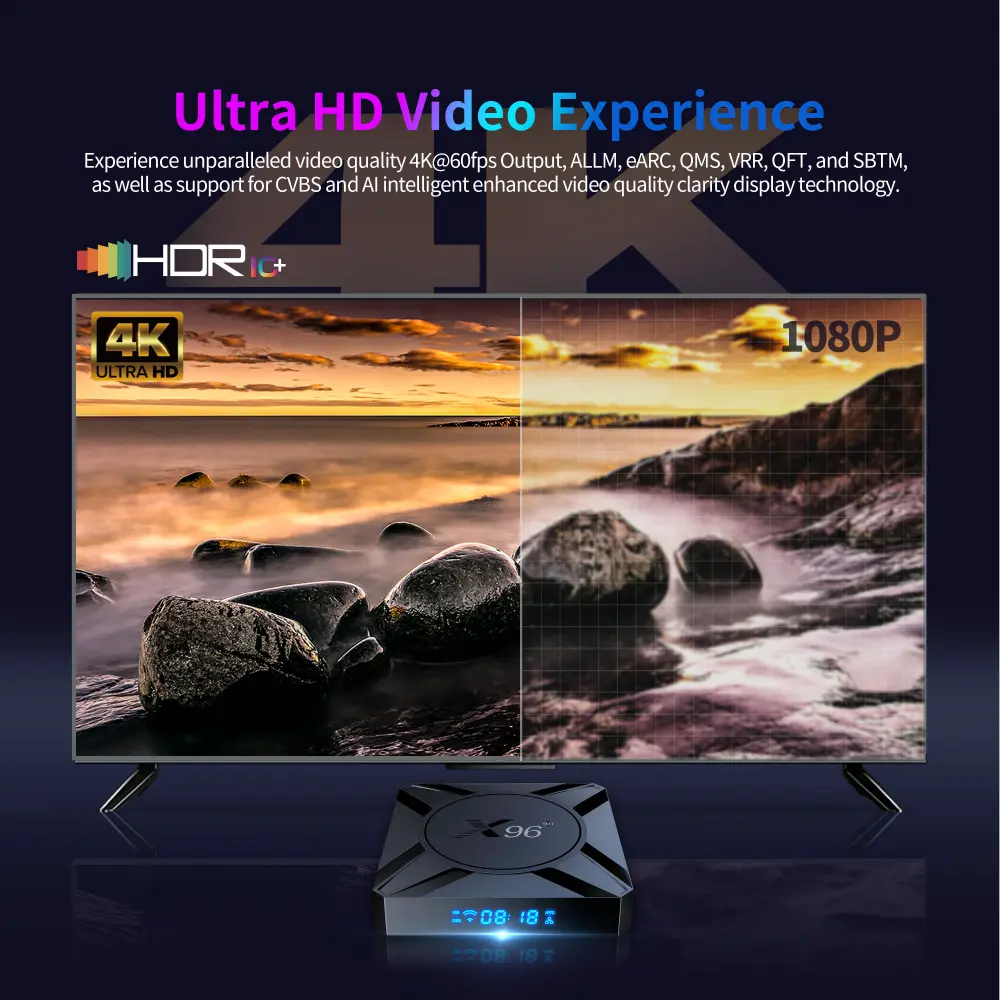
The process begins with an in-depth review of your technical requirements document (TRD). Our engineering team evaluates your targeted performance metrics—such as 4K or 8K video rendering, AV1 hardware decoding, HDR10+ support, Wi-Fi 6 connectivity, and local AI processing—to select the correct SoC (System on Chip). During this phase, critical hardware choices are made regarding power delivery circuits, heat dissipation thermal pads, and memory bus configurations.
2. PCB Layout and Thermal Simulation
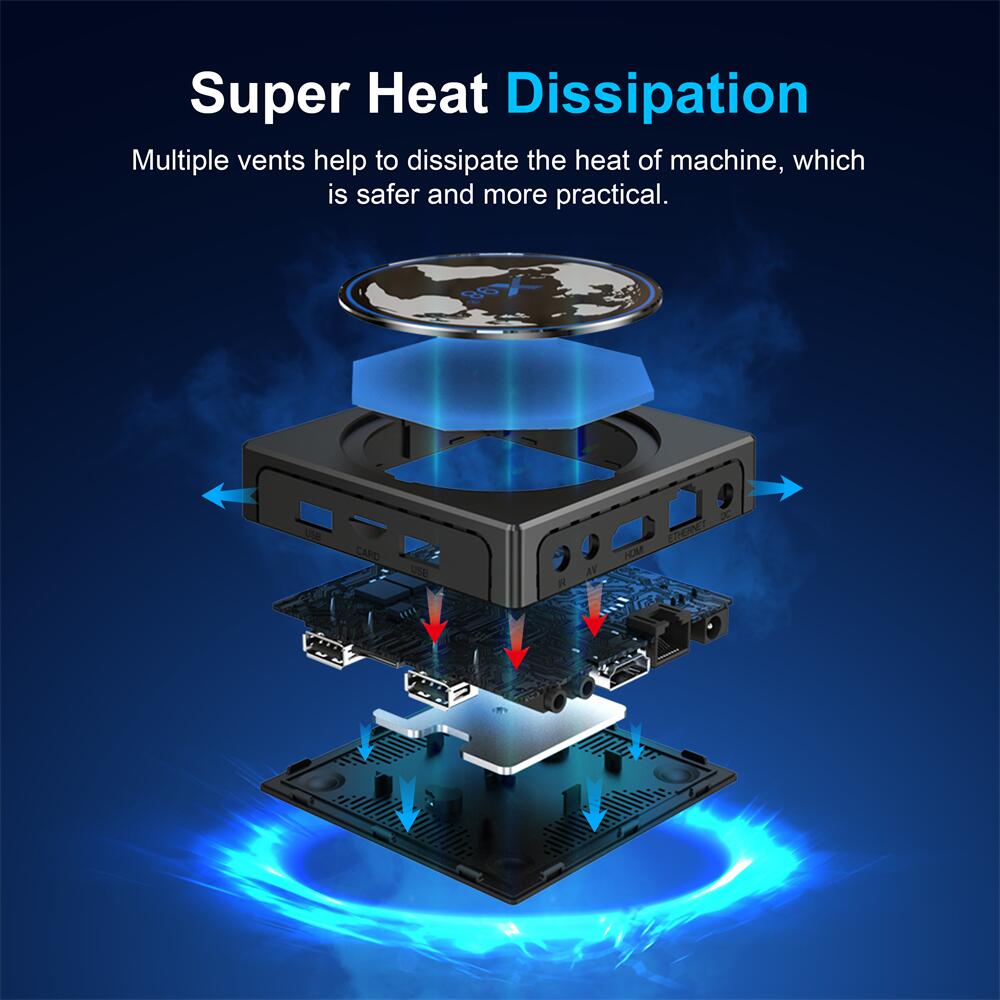
Once the schematic design is approved, our layout engineers design the multi-layer Printed Circuit Board (PCB). For modern streaming media hardware, high-speed signal integrity and thermal dissipation are top engineering priorities. Overheating leads to CPU throttling, frame drops, and premature hardware failure. Advanced computer simulations are run to optimize heat sink size, thermal pad placement, and airflow ventilation slits inside the chassis.
3. Prototyping and Tooling Fabrication
Before committing to mass production tooling, preliminary functional samples are assembled using CNC-machined plastic enclosures and rapid PCB prototyping methods. Once functional validation is complete, steel injection molds for the custom enclosure are cut. Tooling fabrication typically takes 30 to 45 days, followed by trial plastic injection runs (T1 samples) to verify surface finishes, structural snap-fits, and port alignments.
4. Firmware Integration and Security Provisioning
While mechanical molds are being finalized, software engineers integrate system-level drivers and adapt the Android BSP (Board Support Package). For clients seeking Google DRM certifications (such as Widevine L1) or Netflix licensing, key injection procedures are embedded directly into the factory’s secure manufacturing pipeline. HDCP 2.2/2.3 encryption keys are flashed onto the eMMC storage at the chip level to ensure full compatibility with premium protected content streams.
5. Mass Production and Automated Quality Control
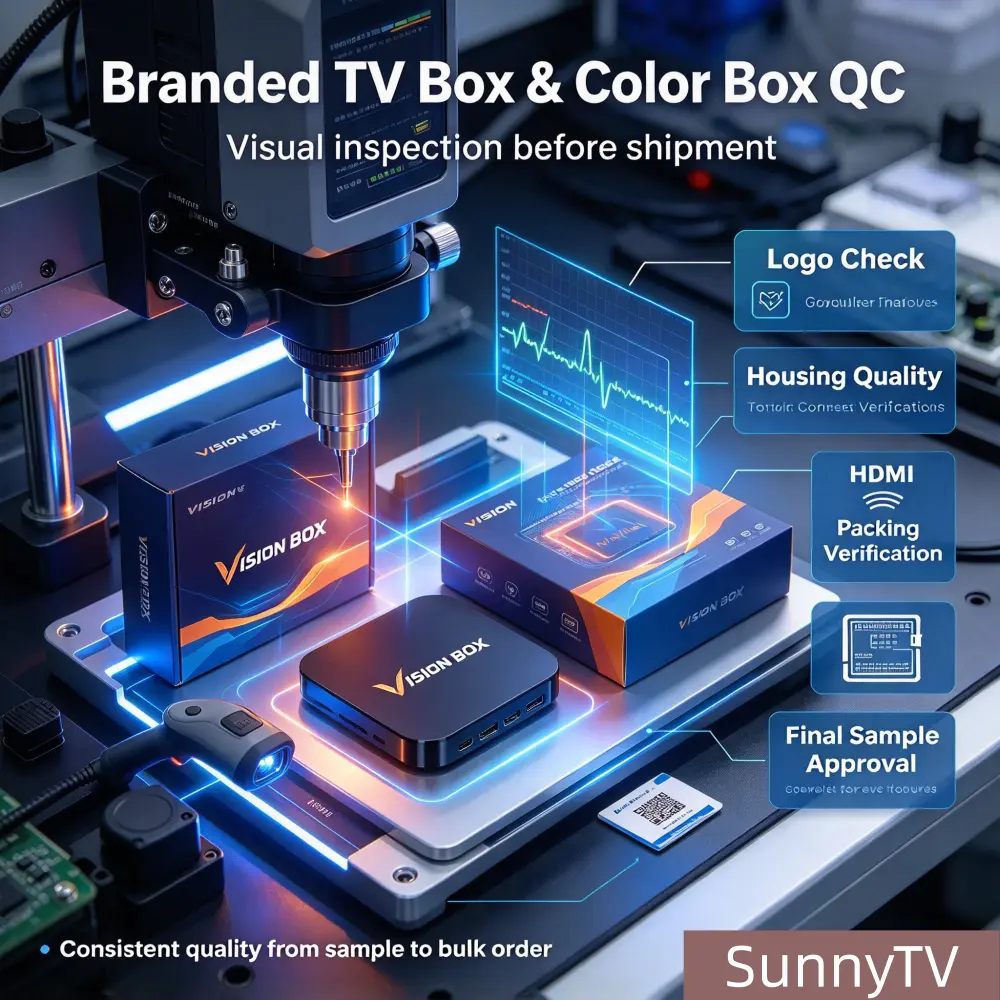
Mass production starts on automated High-Speed SMT placement lines. Solder paste inspection (SPI) machines monitor printing accuracy, followed by Automated Optical Inspection (AOI) after reflow soldering. Once assembled, 100% of the PCBA boards undergo automated functional testing (FCT) to check Wi-Fi signal strength, HDMI output integrity, USB port data transfer rates, and power consumption specs before final enclosure mounting and packaging.
Deep Dive into the ODM Customization Workflow
For brands seeking rapid market entry, purchasing ODM Android TV Boxes streamlines development into an efficient, turn-key experience.
1. Model Selection from Existing Reference Platforms
Clients choose from our portfolio of fully engineered, pre-tested hardware platforms. Whether your project demands an economical budget player based on a quad-core processor or a high-end hybrid box featuring an integrated DVB-T2/S2 tuner, you select a platform that fits your target retail price point.
2. Software Customization and Firmware Building
Even though the physical board design remains standard, software customization offers substantial brand differentiation. Our software team assists with customizing system parameters to match your ecosystem requirements:
- Configuring auto-launch applications for immediate boot-to-app deployment (ideal for hotel IPTV networks or OTT operators)
- Integrating custom TR-069 or USP management protocols for remote device administration and over-the-air (OTA) firmware updates
- Modifying system settings to restrict user access to factory reset options or unauthorized third-party app installations
3. Brand Dressing and Packaging Design
Our graphic design team works directly with your brand guidelines to create custom silkscreen artwork for the TV box housing, layout designs for the user manual, and full-color box artwork. Custom remote controls can be outfitted with dedicated hotkeys that launch your proprietary streaming app with a single press.
4. Accelerated Production and Rapid Logistics
Because the underlying PCBA platform is standardized and raw materials are often pre-stocked in our Dongguan warehouse, lead times for ODM Android TV Boxes are exceptionally short. Orders are typically completed within 3 to 4 weeks after sample confirmation, allowing you to react swiftly to seasonal demand spikes and emerging market opportunities.
Key Considerations for B2B Hardware Sourcing
Choosing between OEM and ODM models requires evaluating several operational variables beyond initial unit pricing. The following factors should guide your long-term procurement strategy.
1. Minimum Order Quantities (MOQ) and Supply Chain Flexibility
Custom OEM hardware development incurs high setup overheads. Factories must order customized raw materials, dedicate specialized SMT setup lines, and create bespoke packaging materials. Consequently, MOQ requirements for custom OEM runs are significantly higher. If your business is launching a market test or operating on a modest initial budget, selecting ODM Android TV Boxes allows you to preserve cash flow while establishing your market presence.
2. Intellectual Property Safeguards and Proprietary Design Rights
If your competitive advantage relies on a unique physical form factor, proprietary cooling architecture, or custom hardware expansion ports (such as integrated RS232 interfaces for industrial digital signage), the OEM route provides full IP protection. Ensure your manufacturing contract explicitly assigns tooling rights and hardware schematics to your company upon project completion.
3. Regulatory Compliance and Global Certification Costs
Selling electronic devices internationally requires compliance with regional safety and telecommunications regulations. Devices entering the European Union require CE, RoHS, and REACH certifications, while products targeting North America require FCC certification. For customized OEM builds, the brand owner must fund new testing procedures and lab certification fees. Conversely, mature ODM Android TV Boxes often leverage pre-existing factory certs, reducing compliance overheads and eliminating testing delays.
4. Quality Assurance Standards and Factory Auditing
Regardless of whether you choose OEM Android TV Boxes or pre-engineered ODM hardware, verifying your factory's quality management system is essential. High-standard factories in Dongguan operate under ISO9001 quality standards and implement rigorous testing protocols throughout production.
Before committing to mass production, request detailed documentation covering the factory’s quality control procedures:
- Incoming Quality Control (IQC): Testing raw ICs, flash memory, circuit components, and plastic enclosures before they reach the assembly line.
- In-Process Quality Control (IPQC): Continuous line monitoring during SMT placement, manual assembly, and wave soldering.
- Burn-In and Aging Tests: Subjecting 100% of completed units to continuous 4K video playback inside elevated temperature chambers (40°C to 45°C) for 4 to 12 hours to identify early component failures.
- Out-going Quality Control (OQC): Final randomized inspection using AQL (Acceptable Quality Level) sampling standards prior to palletizing and export shipment.
Commercial Case Studies: Strategic Application in Real-World Deployments
Examining real-world deployment scenarios illustrates how different business models serve specific commercial goals.
Case Study A: Regional Telecom Operator (The ODM Path)
A mid-sized telecommunications provider in South America needed to supply 20,000 Android-based set-top boxes to their internet subscribers within two months. Designing a bespoke device from scratch was financially unviable and would missed their critical promotional window. By selecting from our catalog of pre-certified ODM Android TV Boxes, the operator secured a high-performance quad-core device featuring custom brand silk-screening, custom remote control hotkeys, a pre-loaded operator launcher, and integrated TR-069 auto-configuration protocols. The entire shipment was delivered ahead of schedule at a fraction of the cost of custom hardware development.
Case Study B: Commercial Smart Signage Integrator (The OEM Path)
An enterprise digital signage provider servicing multinational retail chains required a heavy-duty commercial media player capable of driving dual 4K displays continuously in harsh thermal environments. The device required a custom fanless aluminum chassis with external antenna mounts, an integrated 4G LTE cellular failover slot, and an RS-232 serial port for legacy screen control. Our engineering team worked with their product designers under a custom OEM agreement to lay out a bespoke multi-layer PCB, fabricate extruded aluminum tooling, and deliver a ruggedized hardware platform tailored precisely to their commercial requirements.
How Our Dongguan Factory Powers Your Success
Located at the center of southern China's tech manufacturing corridor, our facility combines advanced hardware engineering, modern automated manufacturing infrastructure, and flexible supply chain management. We provide end-to-end support for clients interested in both white-label ODM solutions and fully customized OEM hardware projects.
Partnering with our facility gives your brand access to premier manufacturing capabilities:
- High-speed Yamaha SMT production lines delivering high component placement accuracy
- In-house software engineering team specialized in Android kernel optimization, custom driver integration, and launcher development
- Dedicated reliability testing lab equipped with thermal shock chambers, drop testers, salt spray testing equipment, and ESD simulators
- Established component supply networks ensuring priority access to top-tier chipsets, storage modules, and wireless modules at competitive prices
- Comprehensive support for international certification applications (CE, FCC, RoHS, HDMI-Adopter, Widevine DRM)
Making the Right Choice for Your Brand
Selecting between OEM Android TV Boxes and ODM Android TV Boxes ultimately depends on your project timeline, internal engineering capabilities, financial resources, and long-term brand vision. If your primary objective is fast market entry, minimal upfront investment, and proven hardware reliability, leveraging an ODM platform is the smartest choice. If your goal is total product differentiation, custom industrial design, and complete ownership of hardware intellectual property, investing in an OEM engineering project provides a sustainable competitive advantage.
Whether you are launching your first media hardware product or expanding an existing fleet of enterprise media players, collaborating with a capable, transparent manufacturer in Dongguan ensures your product meets strict global quality standards. Contact our engineering and sales teams today to discuss your technical specifications, request evaluation samples, or schedule an on-site factory audit.
Share your thoughts
All fields marked with an asterisk() are required